- ARTICLE
Questions to Ask Before Hiring an Odoo Consulting Partner
Choosing an Odoo consulting partner is a very important step in your ERP project implementation process. The software itself is important, but the team that will help you implement it is even more important. Your partner will help you save money and time and make sure the implementation is done right, leaving your team happy using the system. A bad match might lead to delays, budget overrun and the ERP no one likes to use.
Here are 10 questions to ask during your first calls and how the good answers should sound.
What Can an Odoo Consulting Partner Do for Your Business?
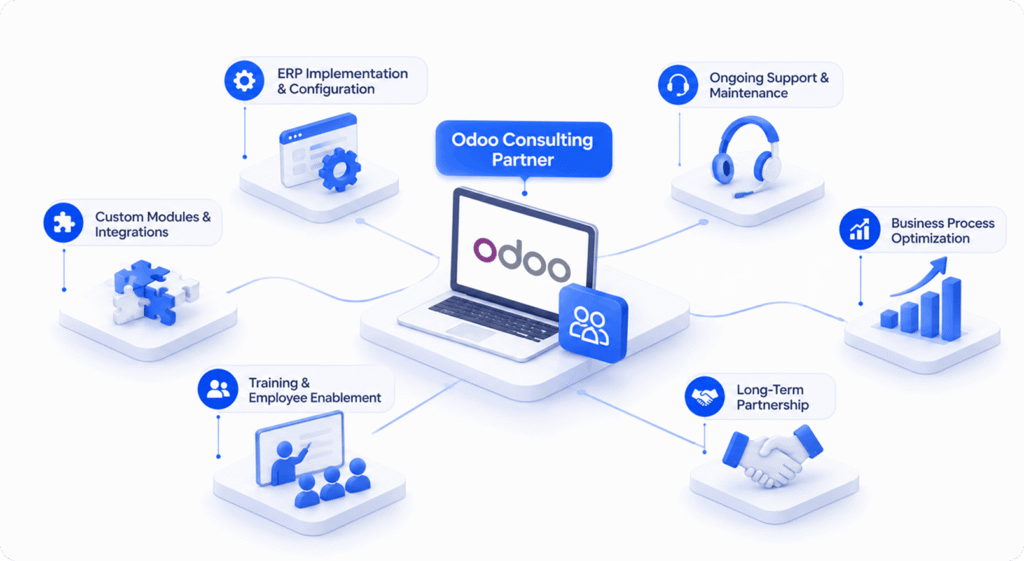
An Odoo consulting partner helps businesses align their ERP systems with their operational requirements and long-term goals. They begin by understanding existing business processes, identifying operational gaps, and recommending suitable Odoo modules such as CRM, Sales, Accounting, Inventory, HR, and Manufacturing. They also manage ERP implementation, including system configuration, workflow setup, and data migration. When standard Odoo features do not meet specific business needs, consultants can develop custom modules, automate workflows, and integrate Odoo with third-party applications. Beyond implementation, they provide employee training, technical support, system maintenance, and guidance to help businesses adapt their ERP systems as their requirements evolve.
However, choosing the right partner requires careful evaluation. Before signing a contract, businesses should ask the following questions to understand a partner’s experience, technical capabilities, implementation approach, and support commitments.
Questions to Ask Before Hiring an Odoo Consulting Partner
Use these questions to test each partner’s experience, process and support. Ask the same ones to everyone on your shortlist.

How many Odoo projects have you delivered in our industry?
Odoo is applicable to various industries, but a manufacturing firm, a retail store, and a services provider will all have different processes.
A strong answer would be one that:
- Identifies similar projects and highlights the challenges they addressed
- Describes how they dealt with unique industry workflows
- Cites references or case studies
Red flag: Generic statement about working with all industries without substantiating.
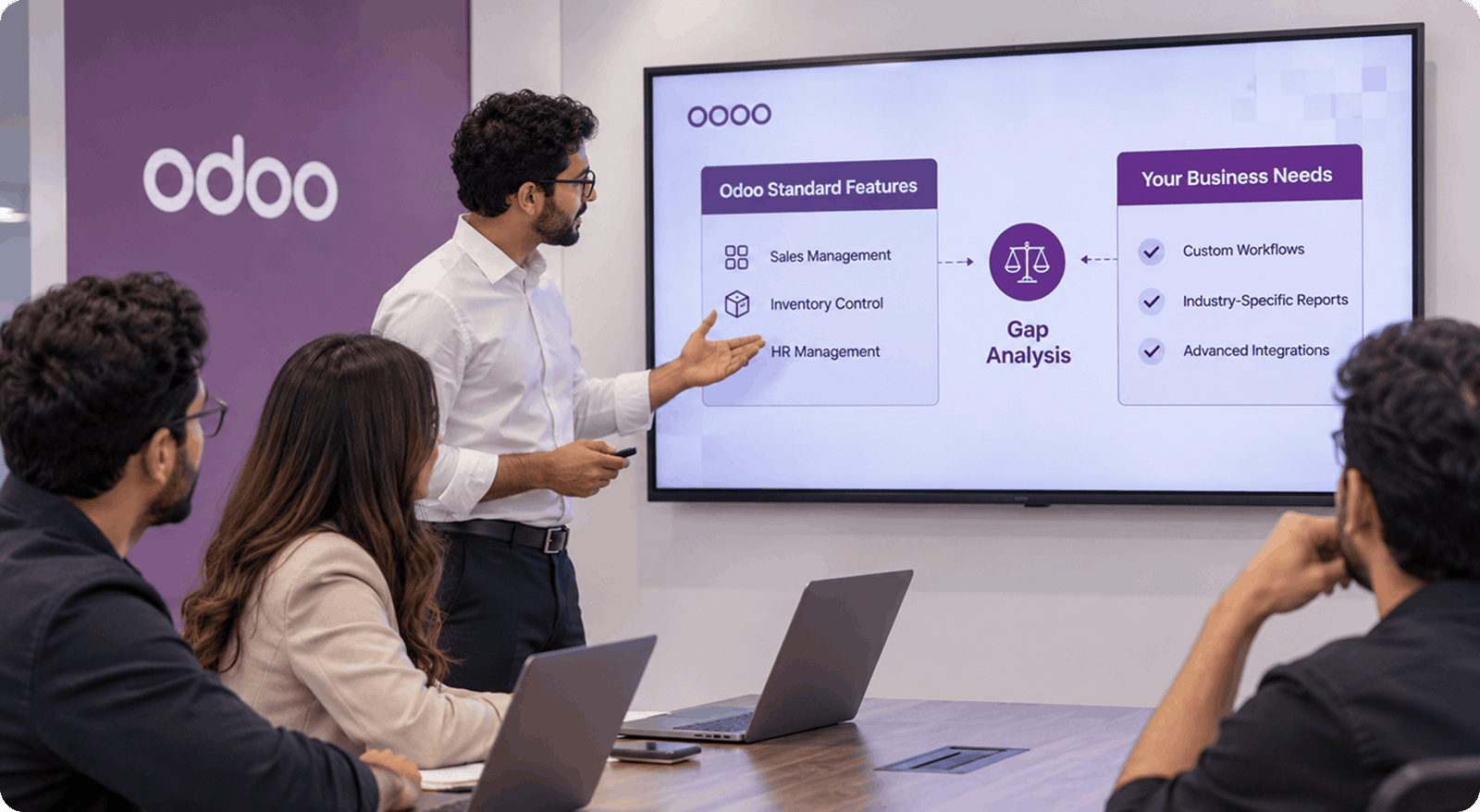
Will you start with a requirements and gap analysis?
Prior to any configuration, it is essential for an ERP consulting partner to know about your business operations.
A good answer will:
- Conduct workshops prior to scoping
- Outline Odoo’s built-in features and its customization requirements
- Provide you with a written report to review
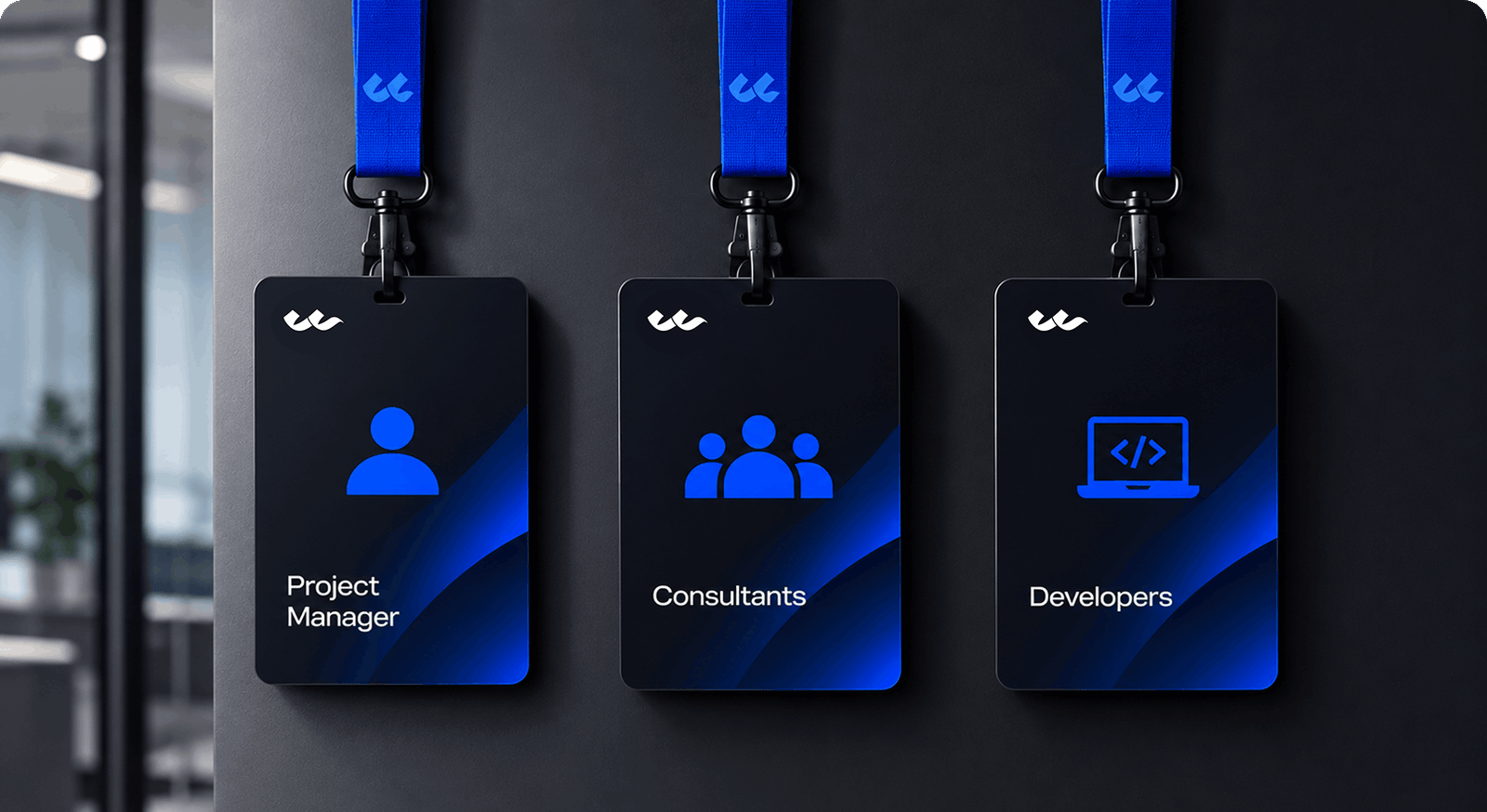
Who exactly will work on our project?
Some companies will make an impression in the sales meeting, but pass off the job to a junior team after that.
Good response:
- Names the Project Manager, Consultants, and Developers
- Describes each one’s qualifications and experience
- Guarantees a consistent team until Go-Live
Red flag: no names, or a team that keeps changing.
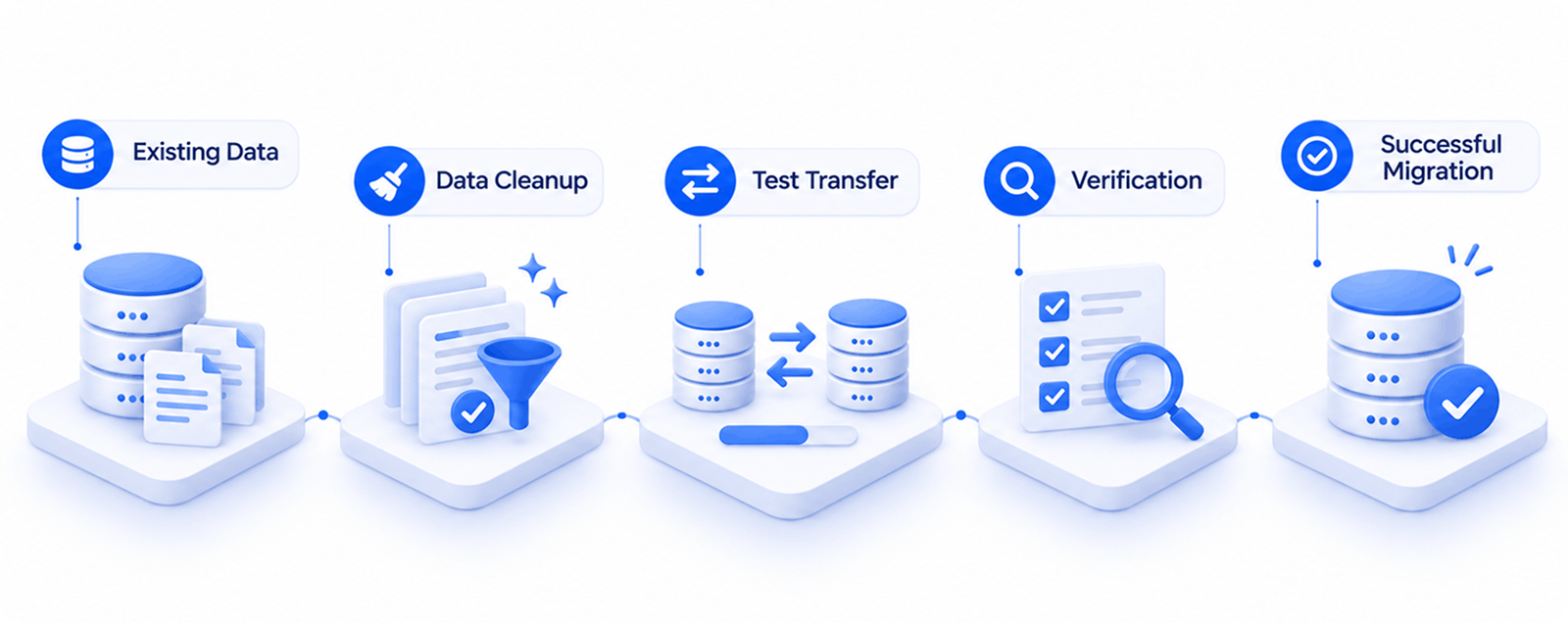
How will you migrate our existing data?
Poorly managed transfer of your existing data is just going to create a whole new problem. Your customer database, product information, and outstanding balances should be handled carefully.
Good Answer:
Involves data cleanup and verification in the plan
Includes test transfers prior to the final transfer
Includes your sign-off on the transferred data
Red flag: no mention of cleaning, testing or reconciliation.
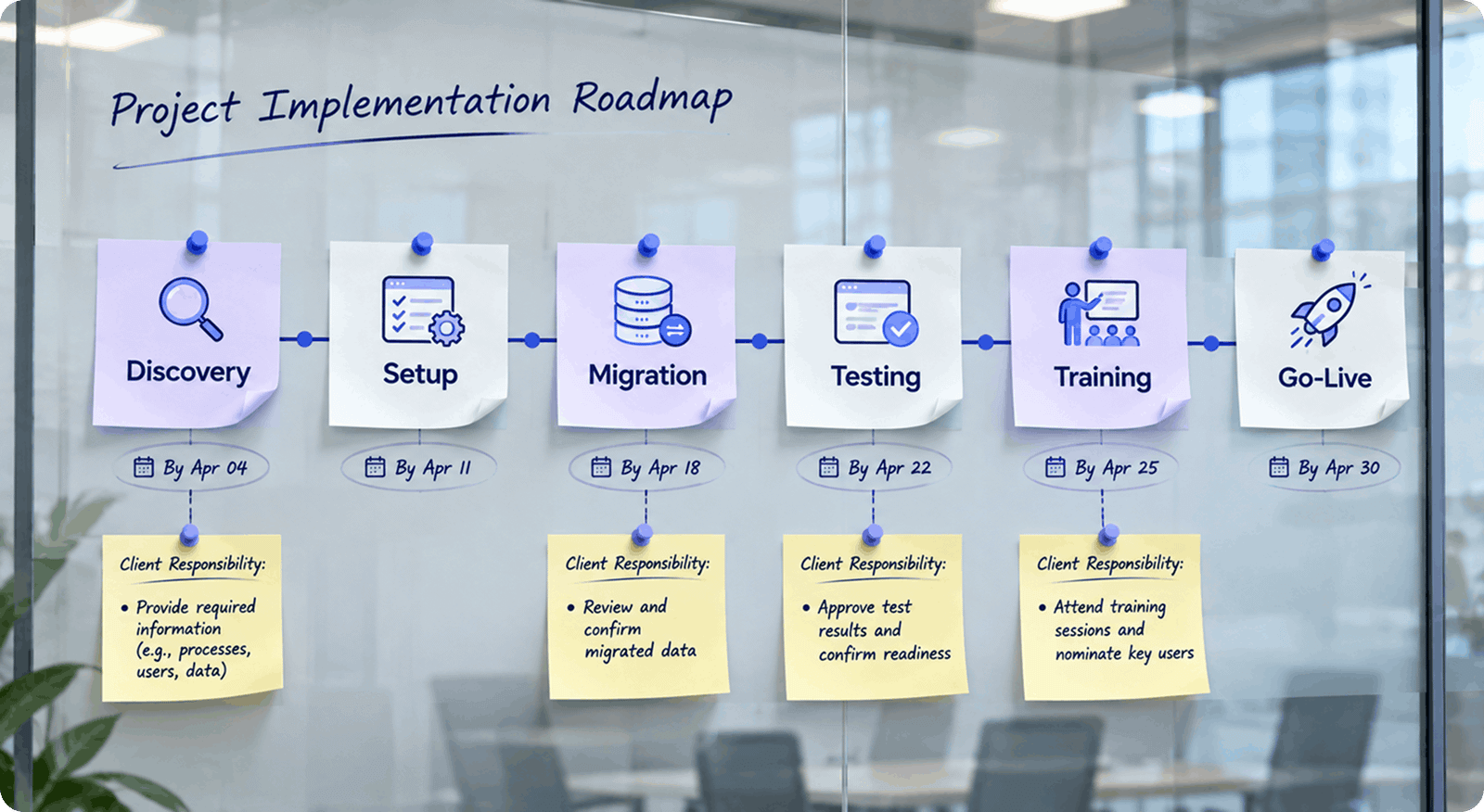
What is the structure of your implementation process?
A well-designed process will ensure that your project will be predictable for you. You should be aware of what is going to happen in each phase and what is required from you.
The correct answer will include:
- Phases such as Discovery, Setup, Migration, Testing, Training, and Go-Live
- Realistic deadlines
- Your responsibilities in each phase
Red flag: we’ll figure it out as we go.
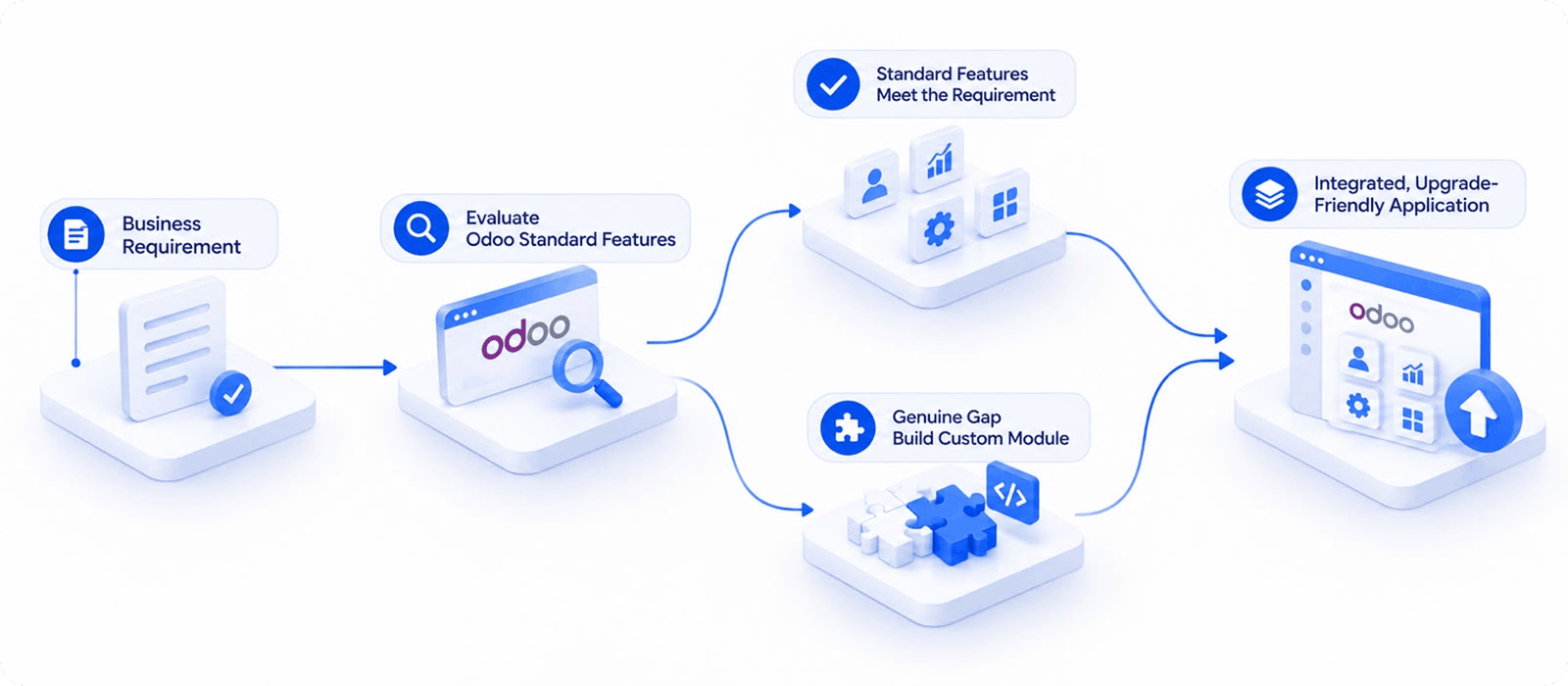
How do you handle customization?
Over-customization makes your application hard to upgrade and costly.
Under-customization means not addressing true business requirements.
A good response:
- Prioritizing standard Odoo functionalities over custom code
- Customizing only those things that bring tangible business benefit
- Making all customizations in proper modules for easy upgrading in the future.
Red flag: a partner who customizes everything without discussing upgrade impact.
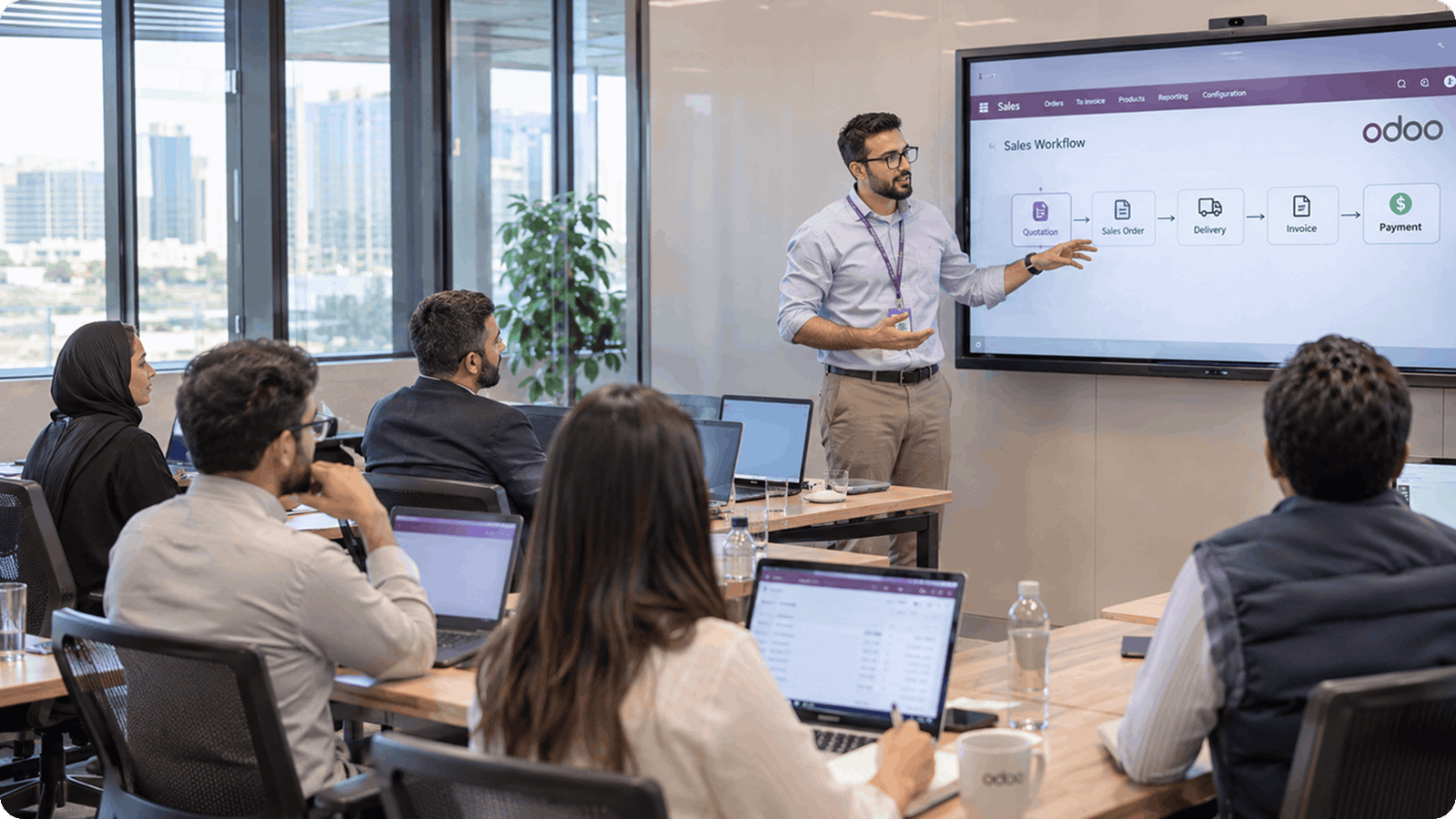
How will you train our staff?
Many ERP implementations have failed due to a lack of proper Odoo training for your staff.”
Good Answer:
Includes role-specific training for finance, sales, inventory and other departments
Includes training materials for new hires after the initial implementation
Includes support during the first weeks after go-live
Red Flag: Training treated as a one-time event post-go live
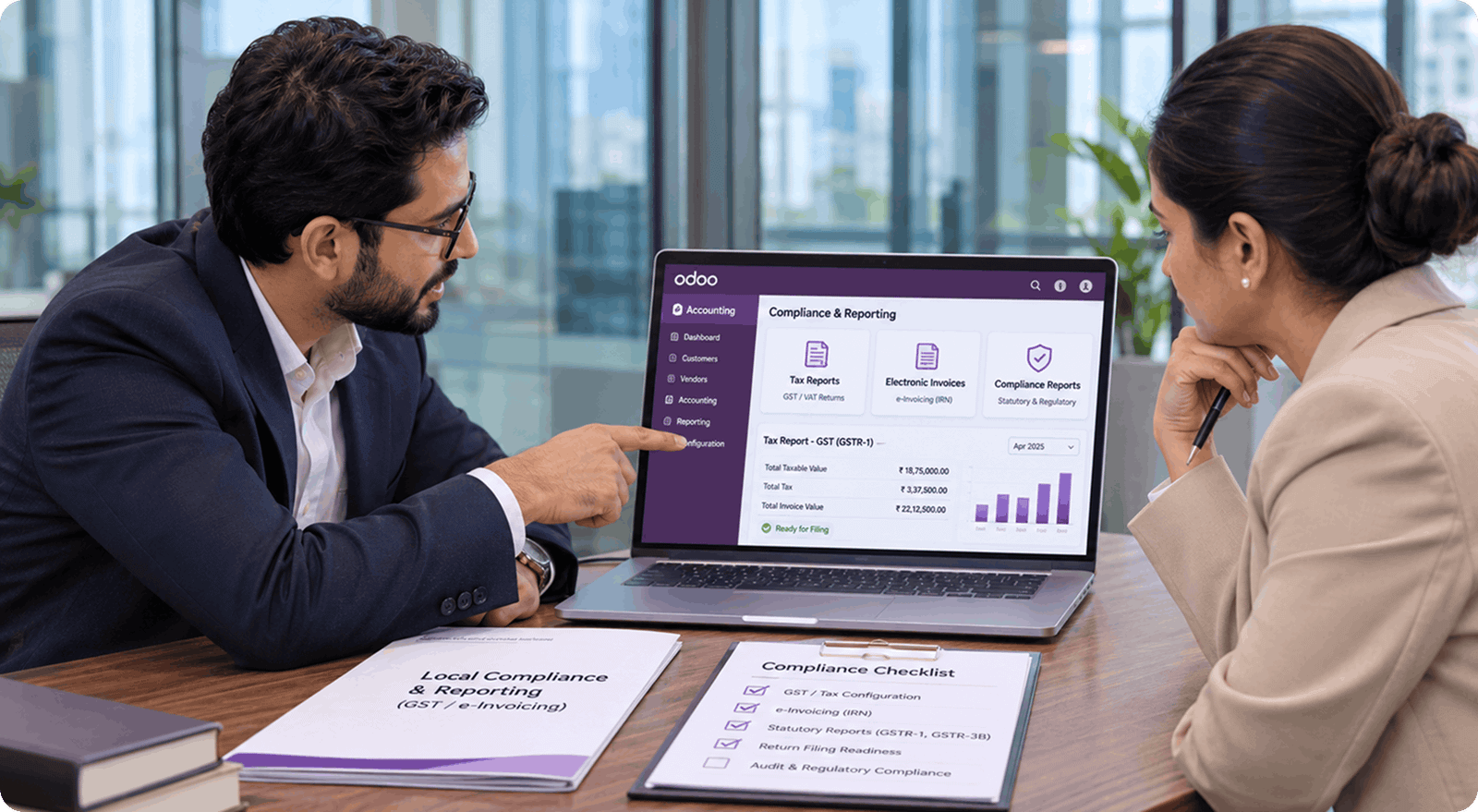
Can you handle our local compliance and reporting needs?
Compliance and reporting laws vary from country to country. Your partner must be knowledgeable about the legal environment in which your business operates.
A good answer:
Provides information on how Odoo complies with local tax and electronic invoicing regulations
Has knowledge on payroll and compliance reporting regulations
Clearly outlines what is standard and what requires additional effort
Red flag: general answers that avoid specifics.
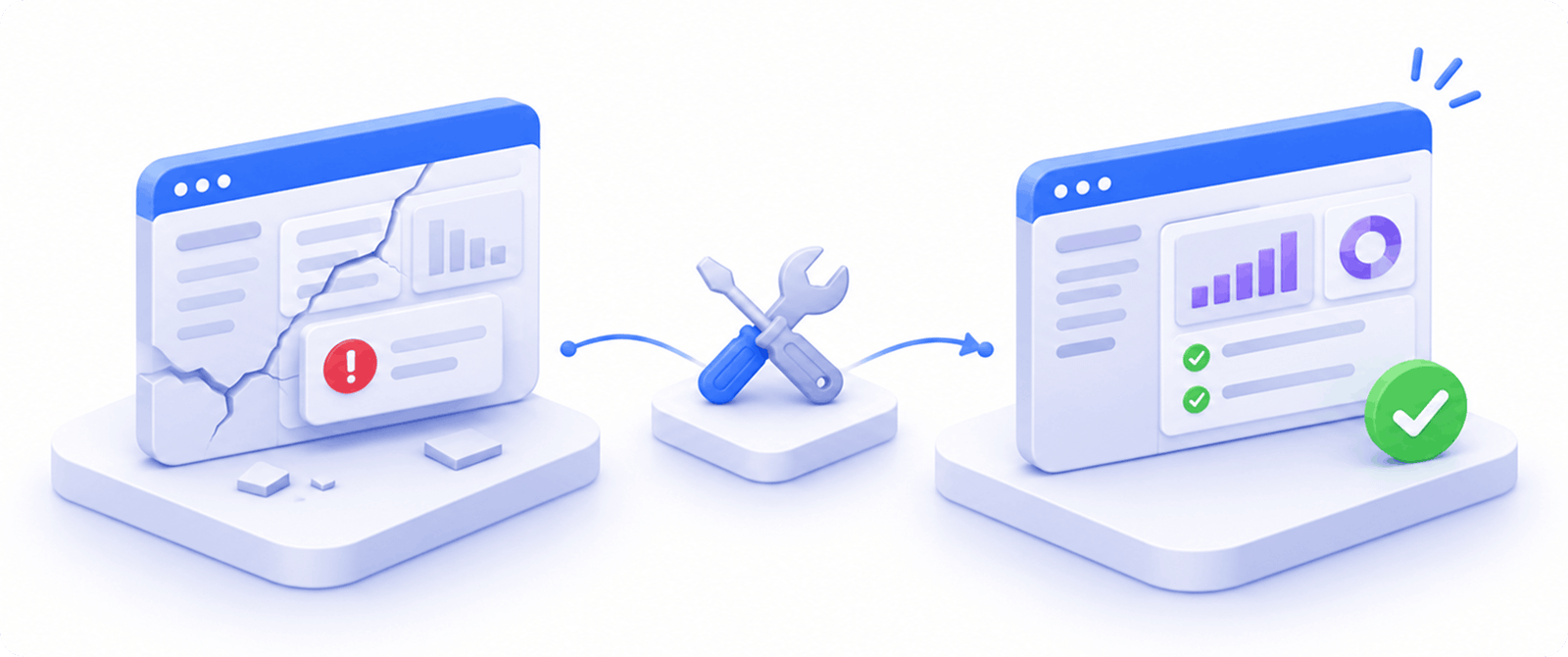
What support do you offer after go-live?
Go live marks the beginning of actual work. You will encounter queries, changes and requirements.
A good answer:
Outlines support hours and response timeframes
Provides maintenance services for fixing problems and upgrade services
Details bug resolution process and change management
Red flag: support is “available on request” with no terms
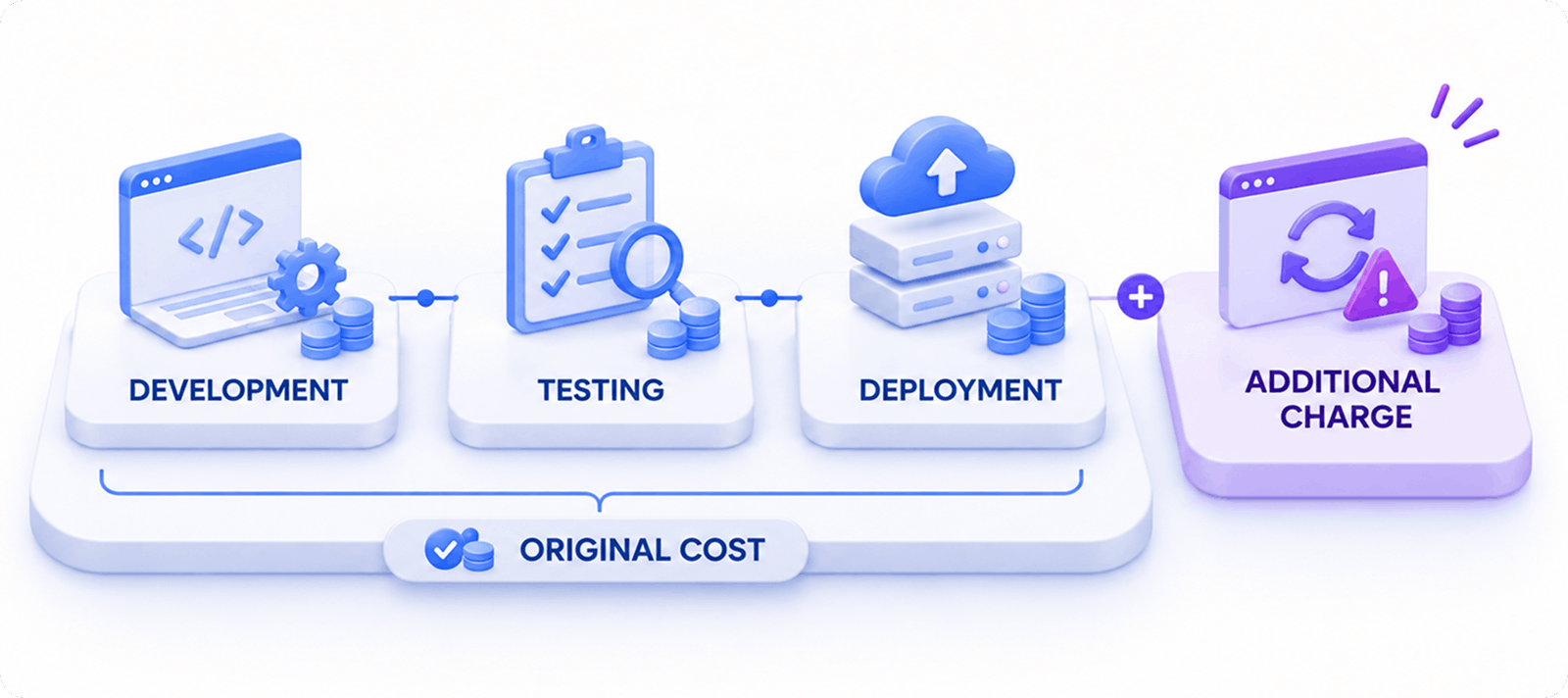
How is pricing structured, and what could change it?
Hidden costs destroy confidence. The client needs to know what is covered and what is not; what might cause costs to go above budget.
Correct response:
Provides cost breakdown by stage or deliverable
Describes how certain changes will be classified as additional work
Reveals process for changing approval
Red flag: a very low quote with no detail, or pricing that can’t be explained.

How Aseef Helps You Get These Answers Right
-
Industry experience and track record
-
A clear process, starting with gap analysis
-
Assigned team and training by responsibilities
-
Smart customization and clean data migration
-
Local compliance expertise
-
Post launch support and clear pricing
CONCLUSION
Choosing the right Odoo consulting partner requires more than comparing prices or checking technical expertise. Businesses should evaluate industry experience, implementation processes, customization practices, data migration, staff training, local compliance knowledge, and post-launch support before making a decision.
Asking the right questions helps businesses understand how a partner approaches ERP projects, manages potential challenges, and aligns Odoo with their operational requirements. A clear scope, transparent pricing, and an experienced team also help reduce implementation risks.
For businesses in Saudi Arabia, understanding local requirements such as ZATCA e-invoicing, VAT, and GOSI reporting is equally important when selecting an Odoo consulting partner.
Aseef supports businesses with Odoo consulting, implementation, customization, integration, and ongoing support to help align ERP systems with their business goals. Contact the team to discuss your Odoo requirements.
Blog Summary
- Explains why choosing the right Odoo consulting partner is important for successful ERP implementation and long-term business operations.
- Covers 10 essential questions to ask before hiring a partner, including industry experience, gap analysis, project teams, implementation processes, and customization.
- Highlights important considerations for data migration, employee training, local compliance, post-go-live support, and transparent pricing.
- Identifies good partner responses and potential red flags to help businesses evaluate Odoo consulting providers.
- Explores how Aseef approaches Odoo consulting through structured implementation, smart customization, clean data migration, compliance configuration, and ongoing support.
- Answers frequently asked questions about Odoo consulting costs, implementation timelines, customization, integration, and Saudi compliance requirements.
Frequently Asked Questions (FAQs)
What does an Odoo consulting partner do?
An Odoo consulting partner assists enterprises to evaluate their ERP needs, select appropriate modules, configure processes, implement, customize, migrate data and offer support.
What should be considered when selecting the right Odoo consulting partner?
Choose a partner that possesses industry knowledge, has done Odoo projects before, has a sound implementation process, qualified consultants, clear pricing and good post-implementation support.
What are the charges of Odoo consulting services?
The cost of Odoo consulting services depends on many factors such as project complexity, requirements, number of users, modules, customization, integration, data migration and support.
Does the Odoo consultant offer customization and integration services?
Yes. The Odoo consultant will create custom modules, customize workflows, and integrate Odoo with third-party apps like payment providers, CRM software, and accounting tools.
Why is post-implementation support necessary to consider while working with Odoo partners?
Post-implementation support is vital for fixing technical problems, keeping the system running smoothly, applying updates, and adapting the Odoo platform to your changing needs.
Publication Date
Category
- ERP Software
Table of Contents
Let’s start a project today
Start your project with us and unlock innovative solutions tailored to your needs. Our team is ready to bring your ideas to life and deliver exceptional results.
Let's start a project today
Start your project with us and unlock innovative solutions tailored to your needs. Our team is ready to bring your ideas to life and deliver exceptional results.
Request Solution