- ARTICLE

Managed IT Security Services for Business Security
Discover how digital marketing for small business drives growth in Riyadh using smart strategies, local SEO, paid ads, and expert guidance.
Discover how digital marketing for small business drives growth in Riyadh using smart strategies, local SEO, paid ads, and expert guidance.
Why Managed IT Security Services Matter for Business Security and Compliance
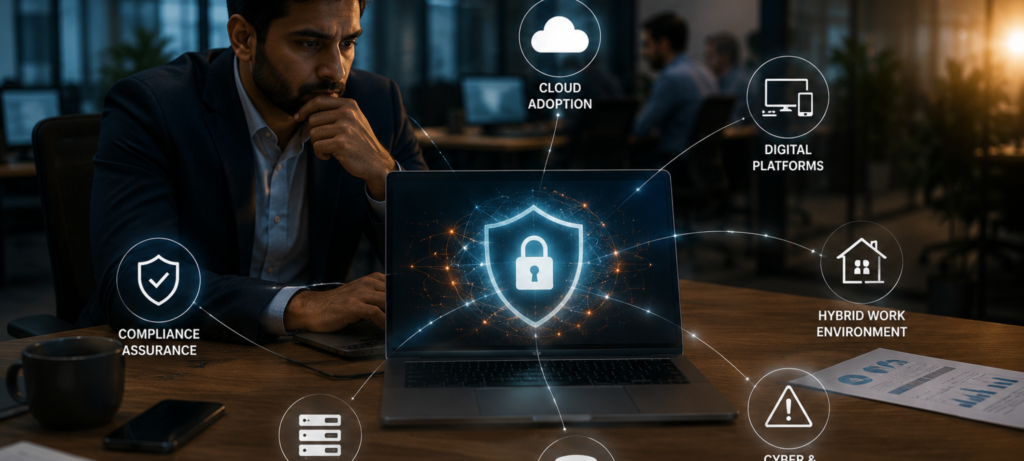
As businesses accelerate cloud adoption, digital platforms, and hybrid working models, their IT environments are becoming more distributed, interconnected, and exposed to cyber and operational risks, making the protection of systems, data, and critical applications a core business priority rather than a purely technical responsibility.
This is where managed IT security services play a vital role. By providing continuous monitoring, rapid threat detection, and expert-led risk management, these services help businesses maintain stability, meet compliance requirements, and scale confidently in an increasingly connected digital landscape.
What Is Managed IT Security Services?
Managed IT security services involve outsourcing your organization’s security operations to a specialized technology partner who actively monitors, protects, and manages your IT environment around the clock. Instead of building and maintaining a large in-house security team, businesses rely on certified experts to reduce risk, respond faster to incidents, and maintain a strong security posture.
These services typically include:
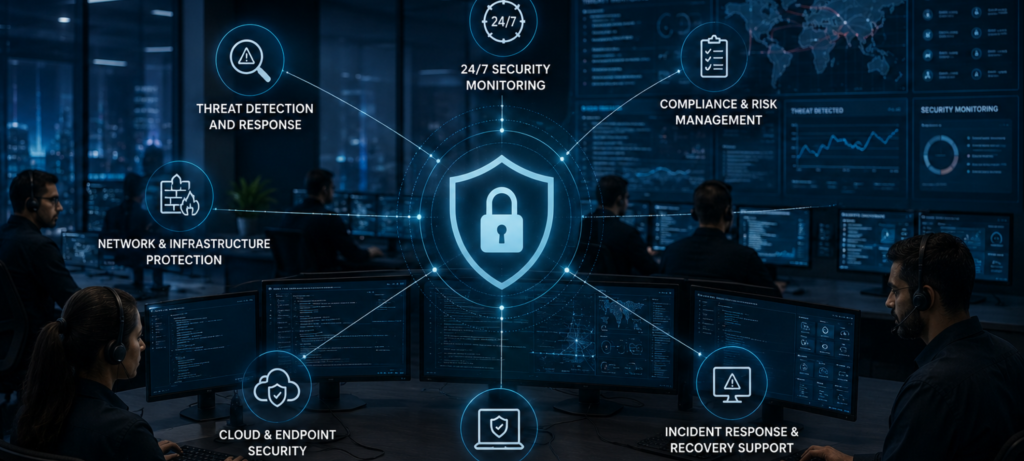
- 24/7 security monitoring – Continuous observation of your systems and networks to identify suspicious activity and potential threats in real time.
- Threat detection and response – Rapid identification, investigation, and containment of cyber threats before they disrupt business operations.
- Network and infrastructure protection – Securing servers, firewalls, applications, and internal networks against unauthorized access and attacks.
- Vulnerability management – Regular scanning and assessment to detect weaknesses in systems and software, followed by remediation recommendations.
- Cloud and endpoint security – Protection for cloud platforms, laptops, mobile devices, and remote users accessing your business environment.
- Compliance and risk management – Support for meeting regulatory requirements and reducing operational and data-related risks through security controls and policies.
- Incident response and recovery support – Structured response processes to contain breaches quickly and help restore systems and operations with minimal downtime.
Key Benefits of Managed IT Security Services
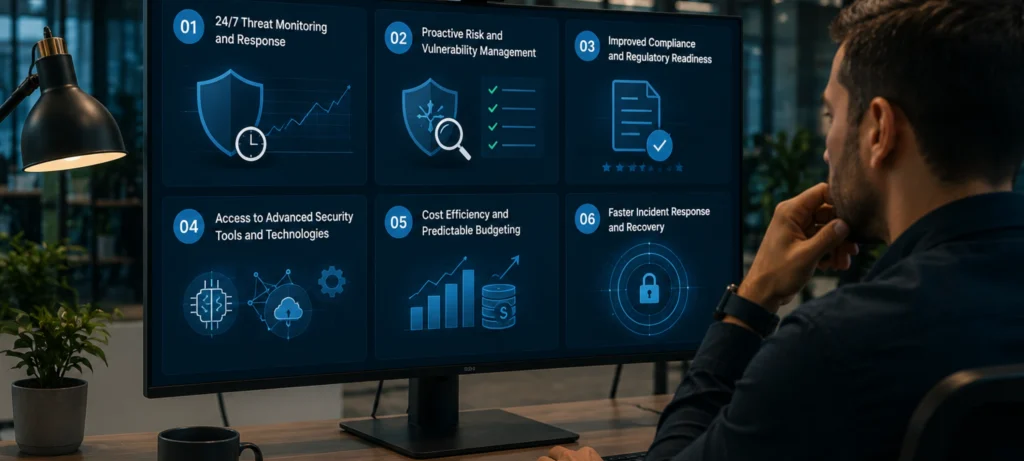
1. 24/7 Threat Monitoring and Response
Managed security teams monitor your systems continuously. If suspicious behavior is detected, they act immediately to contain and mitigate the threat before it spreads.
This significantly reduces the time between detection and response — a critical factor in limiting damage.
2. Proactive Risk and Vulnerability Management
Rather than reacting after a breach, managed security services focus on prevention.
This includes:
- Regular vulnerability assessments
- Security patch management
- Configuration reviews
- Infrastructure hardening
By identifying weaknesses early, businesses can avoid costly incidents.
3. Improved Compliance and Regulatory Readiness
Many industries are subject to strict data protection and cybersecurity regulations. Managed IT security services help organizations align with regulatory requirements by:
- Implementing security controls
- Maintaining audit-ready documentation
- Monitoring access and activity
- Enforcing security policies
This reduces compliance risk and simplifies audits.
4. Access to Advanced Security Tools and Technologies
Enterprise-grade security tools are expensive and complex to manage. Managed service providers already operate advanced platforms for:
- Threat intelligence
- Security information and event management (SIEM)
- Endpoint detection and response
- Network traffic analysis
Your business benefits from these technologies without having to invest heavily in infrastructure.
5. Cost Efficiency and Predictable Budgeting
Building an in-house security operation requires:
- Hiring specialized staff
- Purchasing tools and licenses
- Maintaining infrastructure
- Continuous training and certifications
Managed IT security services convert these large capital investments into predictable operational costs while delivering a higher level of protection.
6. Faster Incident Response and Recovery
When a security incident occurs, speed matters.
Managed security teams follow structured incident response processes to:
- Isolate affected systems
- Identify the root cause
- Remove malicious activity
- Support system recovery
- Prevent future recurrence
This minimizes downtime and business disruption
How Aseef helps as a managed IT security provider
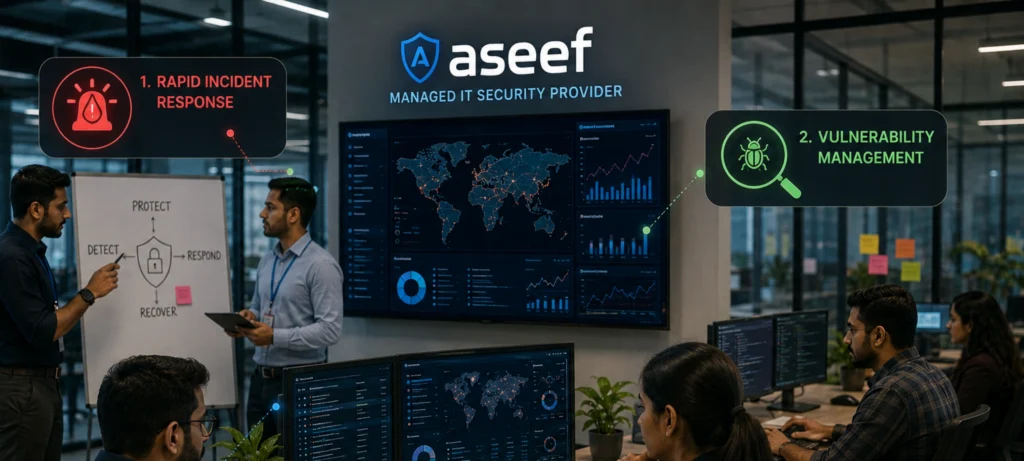
Rapid Incident Response
Immediate investigation, isolation of affected systems, and containment of threats to minimise downtime and operational impact.
Vulnerability Management
Regular security scans and configuration reviews to identify weaknesses and support timely remediation.
Cloud & Endpoint Security
Protection for cloud environments, user devices, and remote access through strong controls and continuous oversight.
Compliance Support
Security policies, access governance, and audit-ready reporting to help meet Saudi regulatory requirements.
Security Visibility & Improvement
Clear reporting, dashboards, and ongoing optimisation to continuously strengthen your security posture.
How Managed IT Security Services Support Business Growth
Modern organisations depend on reliable IT security and managed services to scale digital platforms securely while maintaining compliance and operational resilience.
- Launch new digital products with confidence
Security experts help ensure that applications and platforms are designed and deployed with strong protection in place, reducing the risk of data breaches and service disruptions after launch. - Expand cloud adoption safely
Managed IT security services help secure cloud environments, prevent misconfigurations, and protect data across platforms, allowing organizations to scale cloud usage without increasing operational risk. - Support remote and hybrid work securely
With employees accessing systems from multiple locations and devices, managed services ensure secure access, endpoint protection, and identity controls that keep business operations running safely. - Build customer trust and credibility
Strong, visible security practices reassure customers and partners that their data is protected, strengthening brand reputation and supporting long-term business relationships.
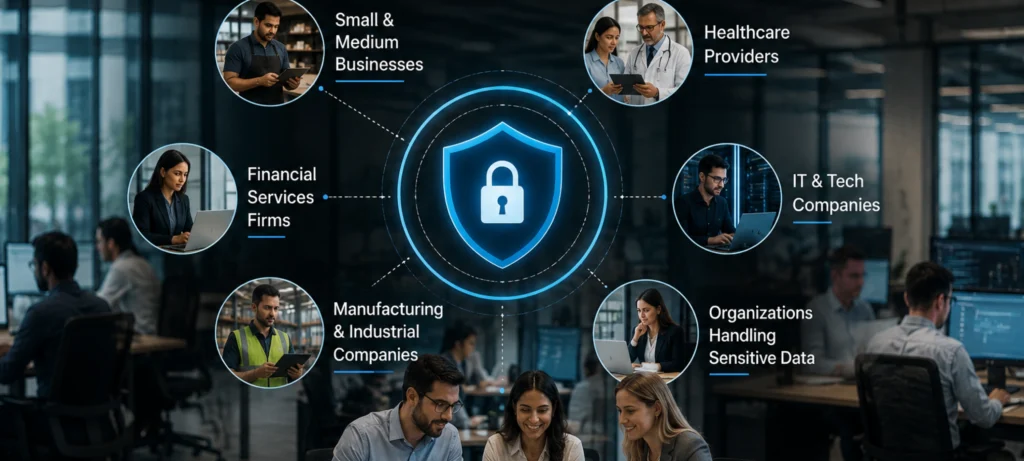
Who Should Consider Managed IT Security Services?
Managed IT security services are ideal for:
- Small and medium-sized businesses without a dedicated security team
- Growing companies adopting cloud and digital platforms
- Enterprises looking to strengthen existing security operations
- Organizations operating in regulated industries
- Startups building technology products that handle customer data
Regardless of company size, any organization that stores, processes, or transmits digital data is a potential target.
How Managed IT Security Services Work in Day-to-Day Operations
- Continuous data collection
Security activity is collected from servers, networks, cloud platforms, applications, and employee devices, including login events, system logs, and network traffic. - Real-time monitoring and analysis
Automated security tools continuously analyze this data to identify unusual behavior, known attack patterns, and policy violations. - Alert generation and prioritization
When suspicious activity is detected, alerts are created and ranked based on risk level and potential impact on business operations. - Human analyst review
Security analysts investigate alerts to confirm whether they are real threats or false positives. - Threat investigation
Confirmed incidents are analyzed to identify how the threat occurred, which systems are affected, and the possible source of the attack. - Containment and immediate response
Actions such as isolating devices, blocking malicious connections, and disabling compromised accounts are performed to stop the threat from spreading. - Recovery and remediation
Affected systems are restored, vulnerabilities are fixed, and security controls are strengthened to prevent similar incidents. - Reporting and continuous improvement
Regular reports and incident summaries are shared with the business, along with recommendations to improve the overall security posture.
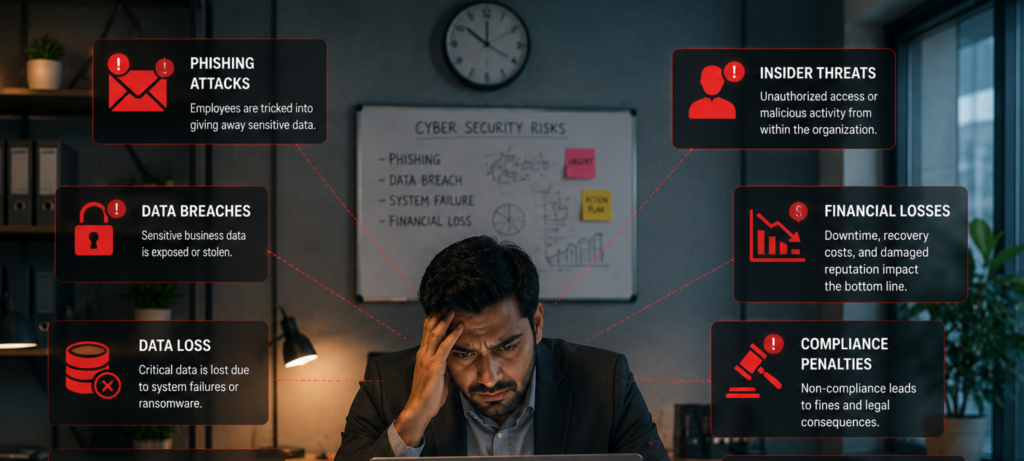
Challenges Businesses Face Without IT Security Managed Services
Skills and expertise gaps
Many organisations struggle to hire and retain experienced security professionals. Without dedicated specialists, critical areas such as threat analysis, incident handling, cloud security, and compliance management are often handled by general IT staff, increasing the risk of misconfigurations and missed threats.Slow threat detection and response
Without continuous monitoring and a dedicated security operations process, attacks can go unnoticed for hours or even days. Delayed response gives attackers more time to move across systems, steal data, and disrupt business operations.Limited visibility across IT and cloud environments
Organisations often lack centralised monitoring of servers, endpoints, cloud platforms, and user activity. This fragmented visibility makes it difficult to detect abnormal behaviour, understand risk exposure, and identify which systems are truly vulnerable.Higher compliance and regulatory risk
Without structured IT security managed services, businesses struggle to maintain audit-ready documentation, consistent access controls, and ongoing policy enforcement. This increases the likelihood of failed audits, regulatory penalties, and contractual risks with customers and partners.Reactive security instead of proactive protection
Most internal teams focus on fixing issues after incidents occur. Without managed IT security services, vulnerability scanning, patch prioritisation, and configuration reviews are often inconsistent, allowing known weaknesses to remain unaddressed.Increased operational and financial impact of incidents
When a breach occurs, the absence of a defined incident response process can lead to longer downtime, confusion across teams, and higher recovery costs. This directly affects productivity, customer trust, and business continuity.
Conclusion
Aseef delivers managed IT security services and it security managed services that provide organisations with continuous protection, faster threat response, and stronger compliance readiness in an increasingly complex digital environment.By combining advanced security technologies with expert-led monitoring and incident management, businesses can reduce risk, protect critical data, and maintain operational stability. With reliable IT security managed services from Aseef, organisations can focus on growth and innovation while ensuring their systems, users, and digital assets remain secure.
Blog Summary
Managed IT security services help organizations strengthen security, reduce operational risk, and maintain compliance in increasingly complex digital environments. As businesses adopt cloud technologies, remote work, and digital platforms, continuous protection and expert-led monitoring have become essential for safeguarding systems, data, and critical operations.
These services provide 24/7 threat monitoring, vulnerability management, incident response, cloud and endpoint security, and compliance support. By proactively identifying risks and responding quickly to threats, managed security providers help businesses prevent costly breaches, minimize downtime, and improve overall security posture.
Managed IT security services also support business growth by enabling secure cloud adoption, protecting remote work environments, and helping organizations launch digital products with confidence. They provide access to advanced security technologies and specialized expertise without the expense of building an in-house security team.
Organizations without dedicated security resources often face challenges such as slow threat detection, compliance risks, limited visibility, and higher recovery costs after incidents. A structured managed security approach addresses these gaps through continuous monitoring, rapid response, and ongoing security improvements.
Aseef delivers managed IT security services that combine expert-led protection, compliance-focused controls, and proactive risk management. This allows organizations to focus on growth and innovation while ensuring their systems, users, and digital assets remain secure.
Frequently Asked Questions (FAQs)
1. What are managed IT security services?
Managed IT security services provide continuous protection of your IT environment through 24/7 monitoring, threat detection, incident response, and proactive risk management delivered by an external security specialist.
2. What is included in IT security managed services?
IT security managed services typically include real-time monitoring, threat detection and response, vulnerability management, network and cloud security, endpoint protection, and compliance and risk management support.
3. How do IT security and managed services help with compliance?
IT security and managed services support regulatory readiness by implementing security controls, monitoring user and system activity, maintaining audit-ready documentation, and enforcing security policies across the organisation.
4. Are managed IT security services suitable for small and growing businesses?
Yes. Managed IT security services are well suited for small and medium-sized organisations that need enterprise-level protection and compliance support without the cost of building and operating an internal security team.
5. How quickly can IT managed security services respond to cyber incidents?
With continuous monitoring and automated alerting, IT managed security services can detect threats in real time and initiate rapid containment, investigation, and recovery actions to minimise business disruption.
6. Why choose Aseef for managed IT security services?
Aseef delivers managed IT security services and it security managed services that combine expert-led monitoring, rapid incident response, and compliance-focused security controls, helping organisations reduce risk and maintain operational stability

Publication Date
Category
- Cyber Security
Table of Contents
- What Is Managed IT Security Services?
- Key Benefits of Managed IT Security Services
- How Aseef Helps as a Managed IT Security Provider
- How Managed IT Security Services Support Business Growth
- Who Should Consider Managed IT Security Services?
- How Managed IT Security Services Work in Day-to-Day Operations
- Challenges Businesses Face Without IT Security Managed Services
- Conclusion
Let’s start a project today
Start your project with us and unlock innovative solutions tailored to your needs. Our team is ready to bring your ideas to life and deliver exceptional results.




Let's start a project today
Start your project with us and unlock innovative solutions tailored to your needs. Our team is ready to bring your ideas to life and deliver exceptional results.
Request Solution