How to Make a Good Website Design for Business Success

11 min read

Website Design for Business Success

Explore how AI in digital marketing boosts efficiency, personalised content, and improves ROI with automation, analytics, and smart strategy.

Explore how AI in digital marketing boosts efficiency, personalised content, and improves ROI with automation, analytics, and smart strategy.

How To Make A Good Website Design

In today’s digital-first world, your website is often the first impression customers have of your business. Knowing how to make a good website design is essential for building trust, enhancing user experience, and driving conversions. At Aseef, we combine creativity, usability, and strategy to create websites that engage visitors and support business growth. 

1. Start With a Clear Purpose

Before designing a single page, define your website’s main goal. 

 A clear purpose shapes every design choice from layout and colors to content and navigation. When visitors instantly understand your value, they’re more likely to stay and explore.

2. Keep the Design Simple and Clean

One of the core principles of good web design is simplicity. Avoid cluttered layouts, long blocks of text, or too many colors. A clean, minimalist layout helps users focus on what matters your content and calls-to-action (CTAs).

Use a consistent color palette that reflects your brand, readable fonts, and plenty of white space for a professional, modern look.

3. Ensure Easy Navigation

Smooth navigation keeps visitors engaged. Confusing menus drive users away.
Best practices include:

  • A clear, consistent top menu across all pages
  • A maximum of five or six main categories
  • A search bar for larger sites
  • Breadcrumbs to help users track their location

Simple navigation encourages users to explore more pages and convert.

4. Focus on Mobile-Friendly Design

With most web traffic coming from smartphones, mobile responsiveness is non-negotiable. A responsive design adapts to all screen sizes, ensuring text remains readable, buttons are clickable, and images scale properly.
Mobile optimization not only improves user experience but also boosts SEO rankings since search engines prioritize mobile-friendly websites.

5. Use High-Quality Visuals

Visuals quickly capture attention and communicate your message. Use high-resolution, brand-aligned images and videos but optimize them for speed. Compress large files and use modern formats like WebP.
Don’t forget alt text for every image to enhance accessibility and SEO.

6. Optimize Loading Speed

Website speed can make or break your user experience. Studies show that users abandon sites taking more than three seconds to load.
Improve loading speed by:

  • Compressing images and videos
  • Using browser caching
  • Minimizing code (HTML, CSS, JavaScript)
  • Choosing a reliable hosting provider

A fast website reduces bounce rates and improves conversions.

7. Prioritize Readability and Content Hierarchy

Strong content hierarchy is a key principle of effective UI/UX design services, helping users find information quickly and navigate your website with ease.

 Establish a clear content hierarchy place your most important information and CTAs above the fold so visitors see them immediately.

8. Incorporate Strong Calls-to-Action (CTAs)

Every page should lead visitors toward a specific goal buying, signing up, or contacting you.
A good CTA stands out visually and uses action-oriented language like “Get a Quote” or “Start Now.” Place CTAs strategically on service pages, banners, and at the end of posts to guide user flow.

9. Build Trust With Authenticity

Design alone can’t earn trust authenticity does. Include:

  • Real customer testimonials and reviews
  • An “About Us” page with genuine team photos
  • SSL certification (HTTPS) for security
  • Clear contact details

Transparent, human-centered websites build credibility and stronger emotional connections.

10. Continuously Test and Improve

A good website is always evolving. Regularly analyze site performance through tools like Google Analytics.
Run A/B tests on CTAs, layouts, and visuals to discover what works best. Update outdated content, fix broken links, and adapt to new design trends to stay ahead of competitors.

How To Make A Good Website Design

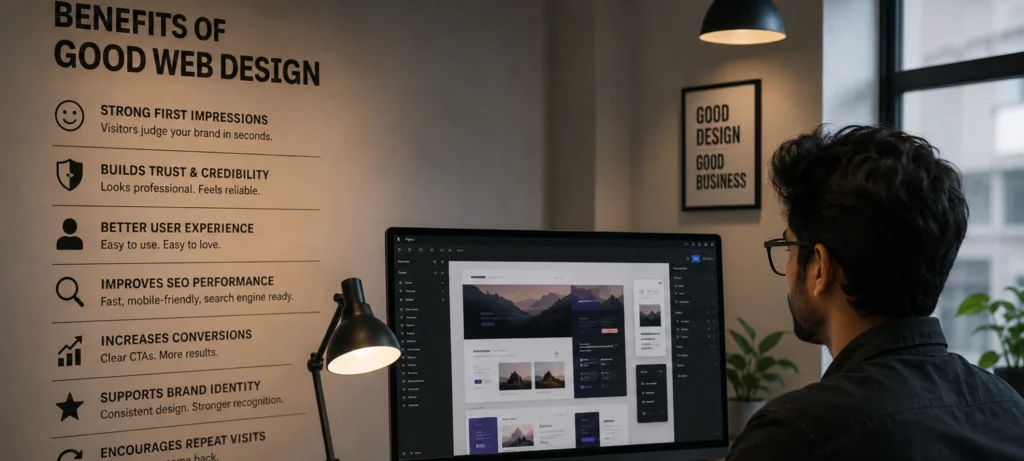
Benefits of Good Web Design

A well-designed website works best when combined with effective digital marketing strategies that drive qualified traffic and increase conversions.

    • Builds Strong First Impressions – Visitors quickly form opinions about your brand based on your website’s design and usability.


    • Boosts Credibility and Trust – A modern, secure, and well-structured website shows professionalism.


    • Improves User Experience (UX) – Intuitive layouts and fast navigation keep visitors engaged longer.


    • Enhances SEO Performance – Search engines favor mobile-friendly, well-structured, and fast-loading sites.


    • Increases Conversions – Clear CTAs and optimized pages guide users toward taking action.


    • Supports Brand Identity – Consistent colors, fonts, and visuals strengthen recognition and loyalty.


    • Encourages Repeat Visits – A smooth, pleasant experience brings users back again and again.

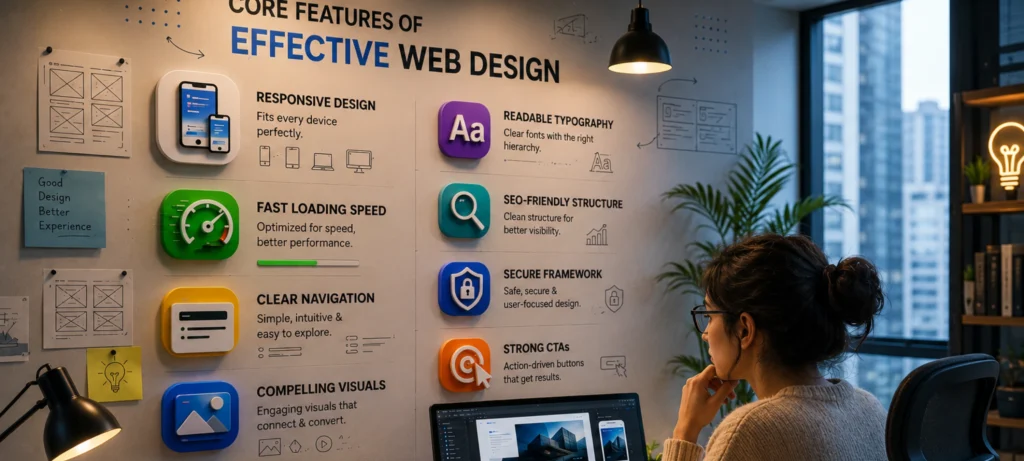
Core Features of Effective Web Design

An effective website design blends creativity with strategy. Here are the essential features every high-performing site should include:

  • Responsive Design – Adapts to all devices and screen sizes seamlessly.

  • Fast Loading Speed – Pages optimized for quick performance and minimal bounce rates.

  • Clear Navigation – Simple menus and logical page hierarchy for easy browsing.
  • Compelling Visuals – High-quality images, icons, and videos aligned with your brand.   

  • Readable Typography – Easy-to-read fonts with a balanced content hierarchy.

  • SEO-Friendly Structure – Clean URLs, optimized meta tags, and proper heading organization.

  • Secure Framework – HTTPS encryption and privacy-focused design for user safety.

  • Strong CTAs – Prominent, action-driven buttons that guide visitors effectively.

  •  

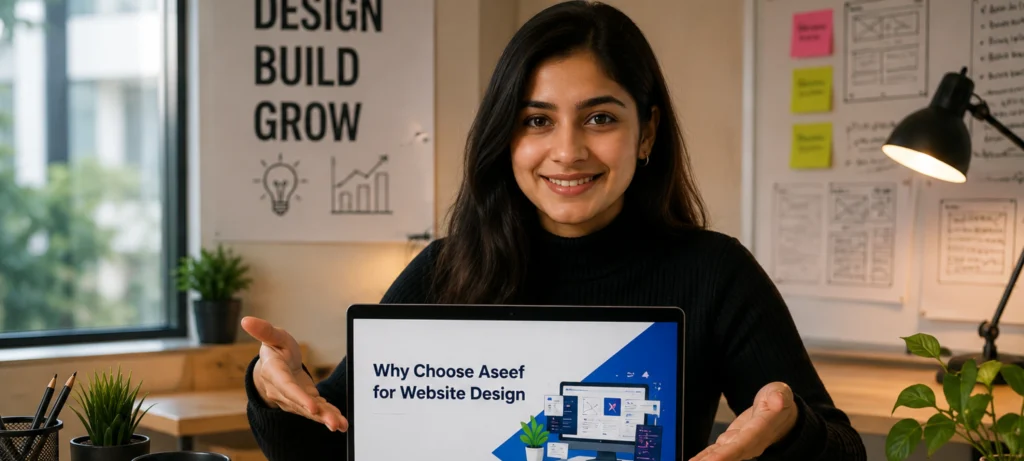
Why Choose Aseef for Website Design

At Aseef, we design websites that don’t just look beautiful they perform. Our expert team focuses on delivering complete, result-driven web development solutions tailored to your business goals.


✅ User-Centric Design – Intuitive layouts that enhance engagement and reduce bounce rates.

✅ SEO Optimization – Search-friendly structure to improve rankings and visibility.
✅ Responsive Development – Seamless experience across mobile, tablet, and desktop.
✅ Speed & Performance – Fast-loading, reliable websites that convert visitors into customers.
✅ Integrated Marketing Approach – We align design with your overall digital marketing strategy for long-term growth.


Whether you are launching a new site or revamping an old one, Aseef builds powerful, conversion-driven designs tailored to your business goals.

Why Choose Aseef for Website Design

Conclusion

A good website design balances beauty, usability, and purpose. It should attract visitors, communicate your message clearly, and guide users toward action.


By focusing on clarity, speed, mobile responsiveness, and trust, you create a website that supports your brand’s goals and delivers measurable results.


Partner with Aseef to build a website that not only looks amazing but performs exceptionally turning your online presence into your most valuable business asset.

Blog Summary

A well-designed website is one of the most valuable assets for any business in today's digital landscape. Understanding how to make a good website design helps businesses create strong first impressions, build credibility, and guide visitors toward meaningful actions. A website should not only look appealing but also deliver a seamless and engaging user experience.

Effective website design starts with a clear purpose and a user-focused approach. Every design element from layout and navigation to content and visuals—should support business objectives while making it easy for visitors to find information and take action. Simplicity, clarity, and consistency are key to creating a professional online presence.

Modern websites must prioritize mobile responsiveness, fast loading speeds, and intuitive navigation. With the majority of users browsing on mobile devices, businesses need websites that perform flawlessly across all screen sizes while maintaining accessibility, usability, and search engine visibility.

High-quality visuals, strong content hierarchy, and compelling calls-to-action play a crucial role in keeping users engaged. These elements help communicate value effectively, improve user journeys, and increase conversion opportunities throughout the website.

Trust is another essential component of successful web design. Features such as customer testimonials, secure HTTPS connections, transparent contact information, and authentic brand messaging help build confidence and encourage long-term customer relationships.

Good website design also delivers measurable business benefits. It enhances SEO performance, strengthens brand identity, improves user experience, increases conversions, and encourages repeat visits. When combined with strategic digital marketing efforts, a well-designed website becomes a powerful growth engine.

At Aseef, we combine design expertise, technical excellence, and strategic thinking to build modern, responsive, and conversion-focused websites. With the right website design approach, businesses can strengthen their online presence, attract qualified visitors, and achieve long-term success.

Frequently Asked Questions (FAQs)

What are the key elements of a good website design?

Focus on clarity, easy navigation, mobile responsiveness, fast loading speed, and strong visuals. Each element works together to create a user-friendly experience that builds trust and encourages conversions.

Use a clean layout, balanced color palette, and readable fonts. High-quality visuals, consistent branding, and plenty of white space make your design visually appealing and professional.

A responsive website adapts to all screen sizes, improving user experience and SEO performance which is crucial as most users browse from mobile devices.

A well-designed site builds credibility, improves engagement, and guides visitors toward taking actions that directly boost your business growth

Compress images, enable browser caching, minimize code, and use reliable hosting. A fast-loading website improves user satisfaction and SEO rankings.

To make a good website design for SEO optimization, use a clean structure, fast-loading pages, and mobile responsiveness. Add keyword-rich titles, meta tags, and headings, optimize images with alt text, and use internal links. A well-optimized design boosts rankings and user experience.

Publication Date

Category

Table of Contents

More Blogs

11 min read

AI in Digital Marketing: Strategies, Tools & Real Impact

14 min read

AI Marketing 2025: Tools, Strategy & Common Issues

11 min read

AI Data Analysis: Smarter, Faster Business Decisions

Available

Let’s start a project today

Start your project with us and unlock innovative solutions tailored to your needs. Our team is ready to bring your ideas to life and deliver exceptional results.

Wave Animation with Popup Button

Let's start a project today

Start your project with us and unlock innovative solutions tailored to your needs. Our team is ready to bring your ideas to life and deliver exceptional results.

Request Solution arrow
wave wave wave wave wave wave wave